
International Wildfire Training
Australian wildfire training for international fire agencies, without the language barrier
Australian wildfire training and education delivered to international organisations, fire agencies and participants. Programs are designed and delivered by EMTRAC and run from a dedicated training base in the Hunter Valley, NSW.
Recent programs
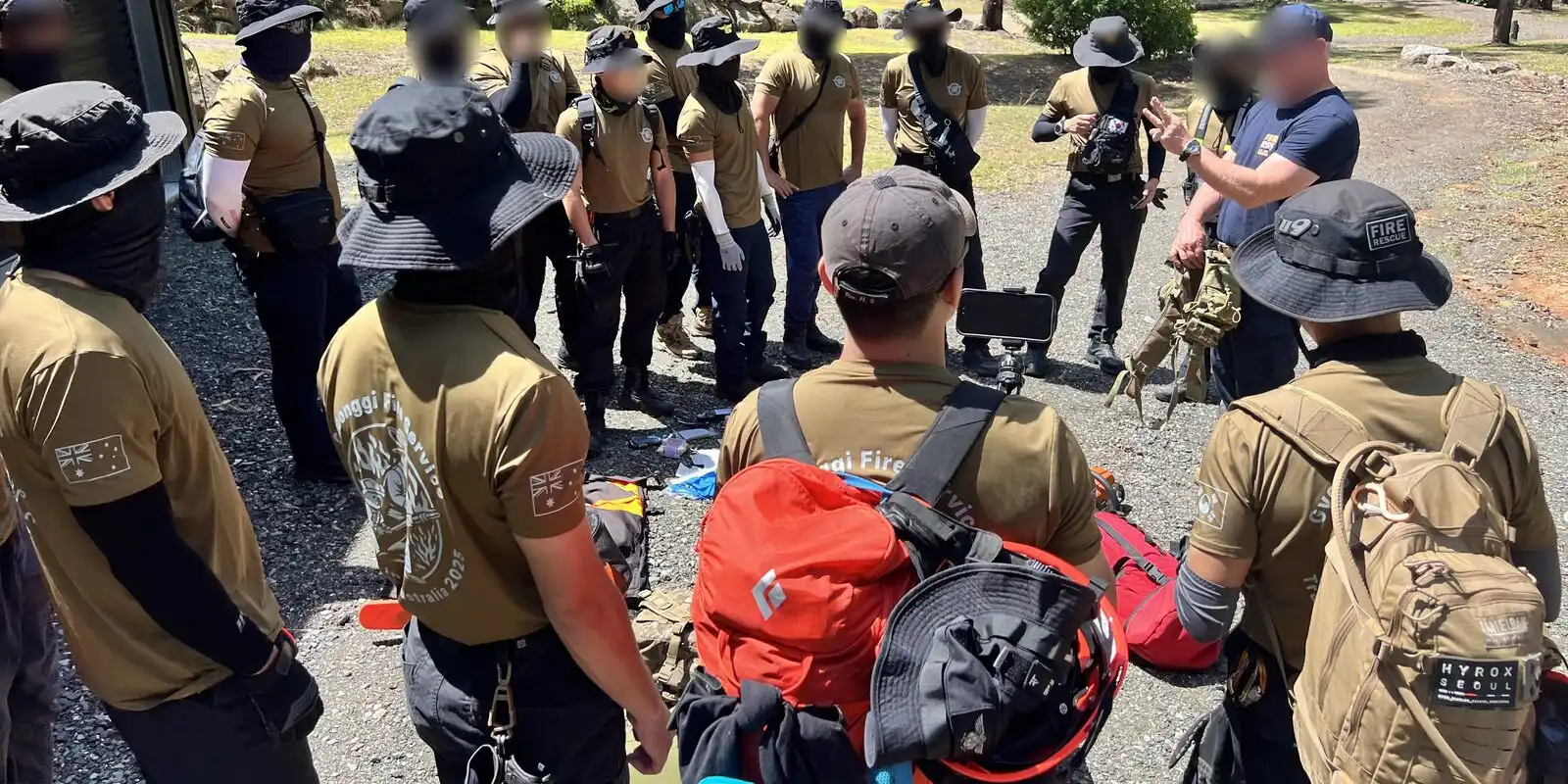
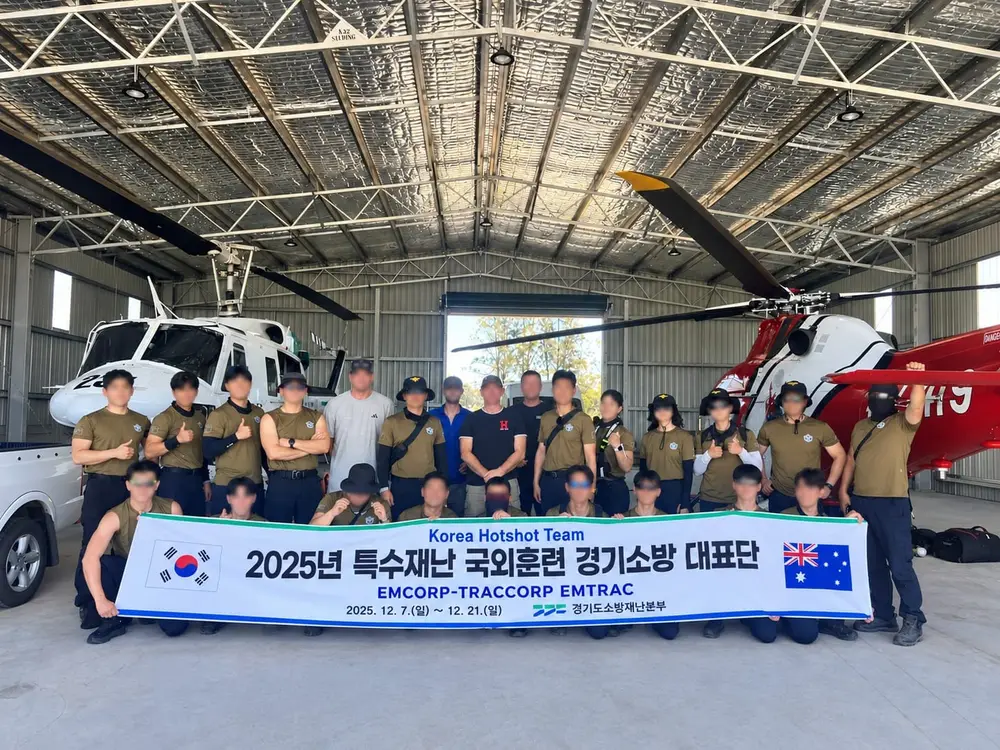
EMTRAC has delivered the international wildfire training program to the Korean National Fire Agency in two consecutive years:
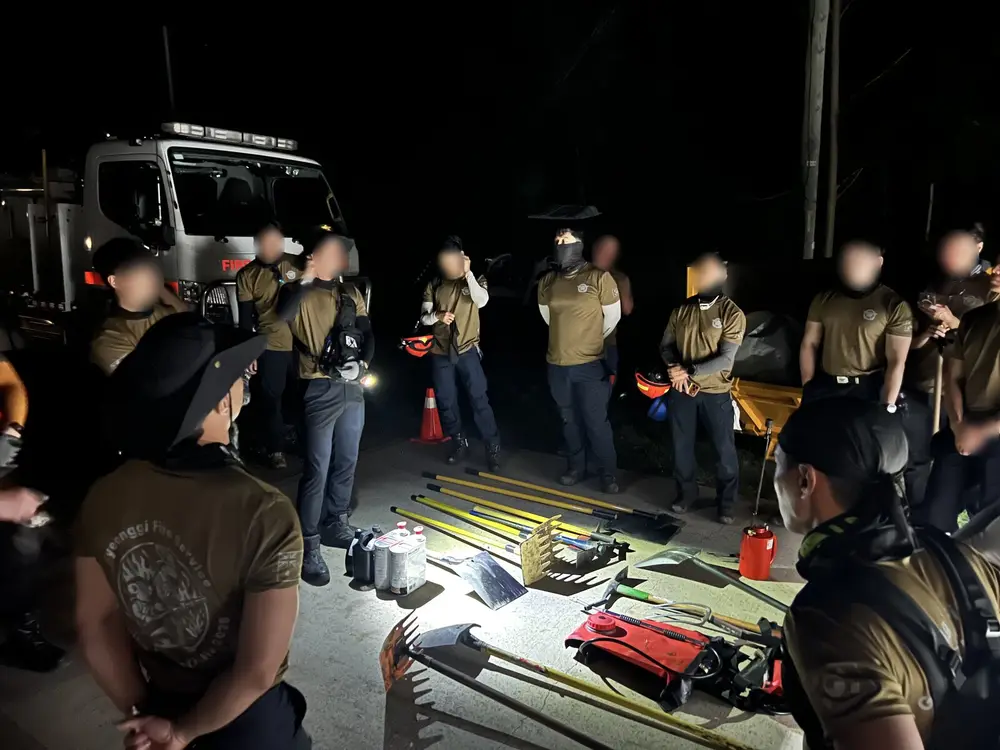
- 2025 — 20 staff, from senior management to operational firefighters, for an intensive two-week residential program covering wildfire suppression tactics, night-time live fire burns, 4WD vehicle recovery and more. Read about the 2025 program
- 2024 — 8 staff for an intensive eight-day residential program with heavy vehicle 4WD use, drone operation, backburning, wildfire suppression, bushland operations and engagements with government fire agencies. Read about the 2024 program
Earlier programs
Earlier programs delivered by the EMTRAC partners:
- 2022, Australia — 20 staff: SW ERT equipped and trained in critical infrastructure emergency response and wildfire protection awareness.
- 2020, Indonesia — 16 staff: Marriott Emergency Response Team firefighters trained in property emergency response and firefighting procedures.
- 2016, Bali — 20 staff: Starwood Emergency Response Team firefighters equipped and developed into a property response organisation to assist in multi-emergency and disaster events.
- 2016, China — 20 staff: Starwood Emergency Response Team firefighters equipped and developed into a property response organisation to assist in multi-emergency and disaster events.
How a program is built
Programs combine classroom learning, equipment familiarisation, field training, practical exercises, scenarios, assessment and facilitated debriefs. They range from two-day practical intensives through to residential programs exceeding two weeks, subject to client requirements and program design. Delivery, accreditation, live-fire components, participant prerequisites and facility availability are confirmed for each program rather than assumed.
Training areas are drawn from the wildfire program: wildfire fundamentals, wildfire operations, vehicles and plant, and technology and specialist capability. Student content is mapped from a variety of global standards and packages, and where appropriate also aligns to the Australian national units Respond to Wildfire (PUAFIR204) and Suppress Wildfire (PUAFIR303).
Training without the language barrier
EMTRAC programs can incorporate advanced multilingual support for international participants, including translated learning material, eLearning and technology-assisted real-time voice and text translation. This enables participants speaking different languages to engage with instructors and learning content within the same program, while receiving information in their nominated language. EMTRAC utilises UN-certified translation platforms.
- Real-time audio translation — instructors and participants work in the same session while each receives information in their nominated language.
- Voice-to-text translation — spoken instruction is carried as translated text alongside the delivery.
- Translated presentation material — classroom and eLearning material prepared in the languages of the cohort.
- Field deployment of translation technology — translation support moves out of the classroom and into the field exercise with the crew.
Program inclusions, translation coverage and delivery arrangements are confirmed for each cohort.
Delivered from the Hunter Valley
International programs run from the EMTRAC training base in the Hunter Valley, NSW, with classrooms, accommodation, vehicle and engine bays, specialist plant and large field and bushland areas on the one site.
What we provide
- Classroom learning
- Equipment familiarisation
- Field training
- Practical exercises
- Scenarios
- Assessment
- Facilitated debriefs
- Real-time audio translation
- Voice-to-text translation
- Translated presentation material
- Field deployment of translation technology
Where this sits in the lifecycle
The stages this capability covers are highlighted.
-
Assess
The operating environment, activities, hazards, access and response limitations are worked through on site and on paper.
-
Plan
A protection model is developed proportionate to what the assessment found — not to a standard package.
-
Prepare
Personnel, vehicles, plant, equipment, communications and technology are configured to the model.
-
Protect
Capability is deployed and maintained for the duration of the works or the contract.
-
Respond
Crews provide initial fire response, incident management support and emergency communications from the ground.
-
Train — relevant to this page
Programs are run for client Emergency Response Teams and for national and international wildfire participants.
-
Review
Post-action reports and digital incident records close the loop after operations, burns and exercises.
The digital layer
EMLearn
Online training
An online training platform offering over 170 interactive modules covering fire, safety, compliance and professional development.
Go deeper on the partner sites
EMTRAC brings the two capabilities together. Where a partner holds the deeper detail, it is linked here.
Bring your crews to Australia.
Tell us the cohort, the languages and the season, and we will scope a program around them.