Infrastructure Protection & Emergency Support
Assessment-led site protection models
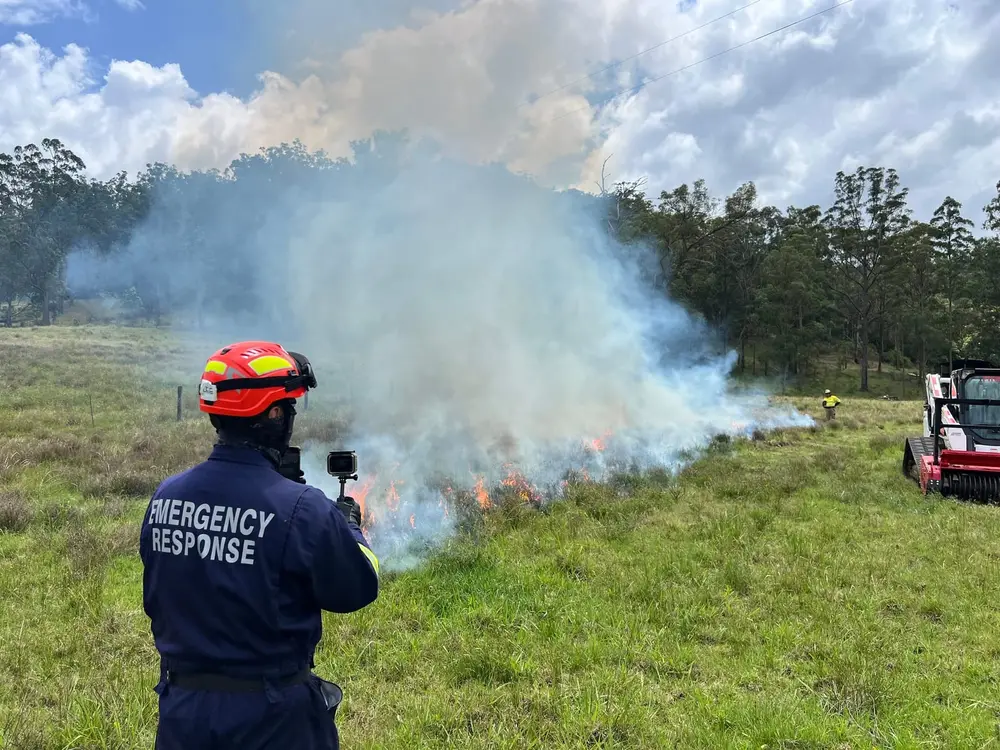
Site-specific emergency protection incorporating trained personnel, fire capability, specialist vehicles, plant, emergency planning, communications and technology.
Protection is built from the site outward. The operating environment, the activities on the ground, the hazards and the realistic limits on outside help are worked through first, and the model follows from what that assessment found — not from a standard package.
What the assessment covers
Wildfire and vegetation exposure. Fuel loads, vegetation type and the terrain around the site and its access routes.
Emergency-service access and response times. Where an external response would come from, how it would arrive and how long that realistically takes.
Water and fire-suppression requirements. Available water, refill points, drafting options and the suppression capability the site needs on hand.
First aid and trauma-response needs. The medical capability held on site and the distance to definitive care.
Hazardous materials and spills. Materials stored or handled on site, and the containment and response arrangements around them.
Communications. Coverage across the site, escalation paths and how field teams stay in contact.
Remote and lone-worker considerations. Personnel working alone or beyond normal supervision, and how they are monitored.
Vehicle and plant requirements. The appliances, plant and equipment matched to the terrain, the work and the risk.
Evacuation and emergency arrangements. Muster points, evacuation routes and the plans that connect them to the wider site.
Protection that carries a digital layer
EMTRAC deployments can be supported by EMAction, providing an additional digital safety and operational layer for personnel operating in remote and challenging environments.
What we provide
- Site-specific emergency protection models
- Trained, uniformed fire and emergency personnel
- Specialist vehicles, plant and equipment matched to the terrain
- Emergency planning, communications and escalation paths
- A digital safety and operational layer over the deployment
Where this sits in the lifecycle
The stages this capability covers are highlighted.
-
Assess — relevant to this page
The operating environment, activities, hazards, access and response limitations are worked through on site and on paper.
-
Plan — relevant to this page
A protection model is developed proportionate to what the assessment found — not to a standard package.
-
Prepare — relevant to this page
Personnel, vehicles, plant, equipment, communications and technology are configured to the model.
-
Protect — relevant to this page
Capability is deployed and maintained for the duration of the works or the contract.
-
Respond
Crews provide initial fire response, incident management support and emergency communications from the ground.
-
Train
Programs are run for client Emergency Response Teams and for national and international wildfire participants.
-
Review
Post-action reports and digital incident records close the loop after operations, burns and exercises.
The digital layer
EMAction
Field safety, digitally supported
Real-time incident and emergency management, and the digital field-safety platform used across the group. Traccorp and EMTRAC deployments can be supported by EMAction, providing an additional digital safety and operational layer for personnel operating in remote and challenging environments. In buildings and venues it provides QR check-in, warden communications, live mapping, PEEP registers and audit trails aligned with AS 3745 and AS 4083.
Go deeper on the partner sites
EMTRAC brings the two capabilities together. Where a partner holds the deeper detail, it is linked here.
Every site is different. Let's build a protection model that fits yours.
Talk to us about an assessment of your operating environment and the capability it calls for.